Preparing for your first professional resuscitation class can feel unnerving, particularly if a new job offer, nursing clinical rotation, or license renewal hinges on earning your card. Basic Life Support (BLS) is the standard resuscitation credential required across medical, dental, and emergency care settings. If you are enrolling in a BLS CPR certification course in Visalia, CA, understanding how class time is spent helps remove anxiety so you can focus on mastering physical rescue techniques.
Modern BLS training emphasizes practical skills, real-time feedback technology, and structured teamwork. First-time students in the Central Valley will complete a combination of cognitive learning and hands-on skills practice, covering adult, child, and infant resuscitation protocols.
Key Takeaway: First-time BLS students in Visalia can expect a structured, skills-heavy session centered on high-quality chest compressions, bag-valve-mask ventilation, and automated defibrillator use. Earning a valid provider card requires physically demonstrating these skills on feedback manikins, whether you choose a traditional full-classroom setting or a flexible blended learning format.
What Makes BLS Different From Standard First Aid and CPR?
First-time students often ask whether a general lay-responder CPR class satisfies healthcare employment standards. Basic Life Support differs significantly from general public courses because it covers advanced multi-rescuer scenarios and clinical equipment.
While layperson courses focus primarily on single-rescuer adult CPR and simple AED operation, a professional BLS curriculum teaches:
- Two-Rescuer Team Dynamics: Coordinating compressions and ventilation with a partner, including smooth role swaps every two minutes to reduce fatigue.
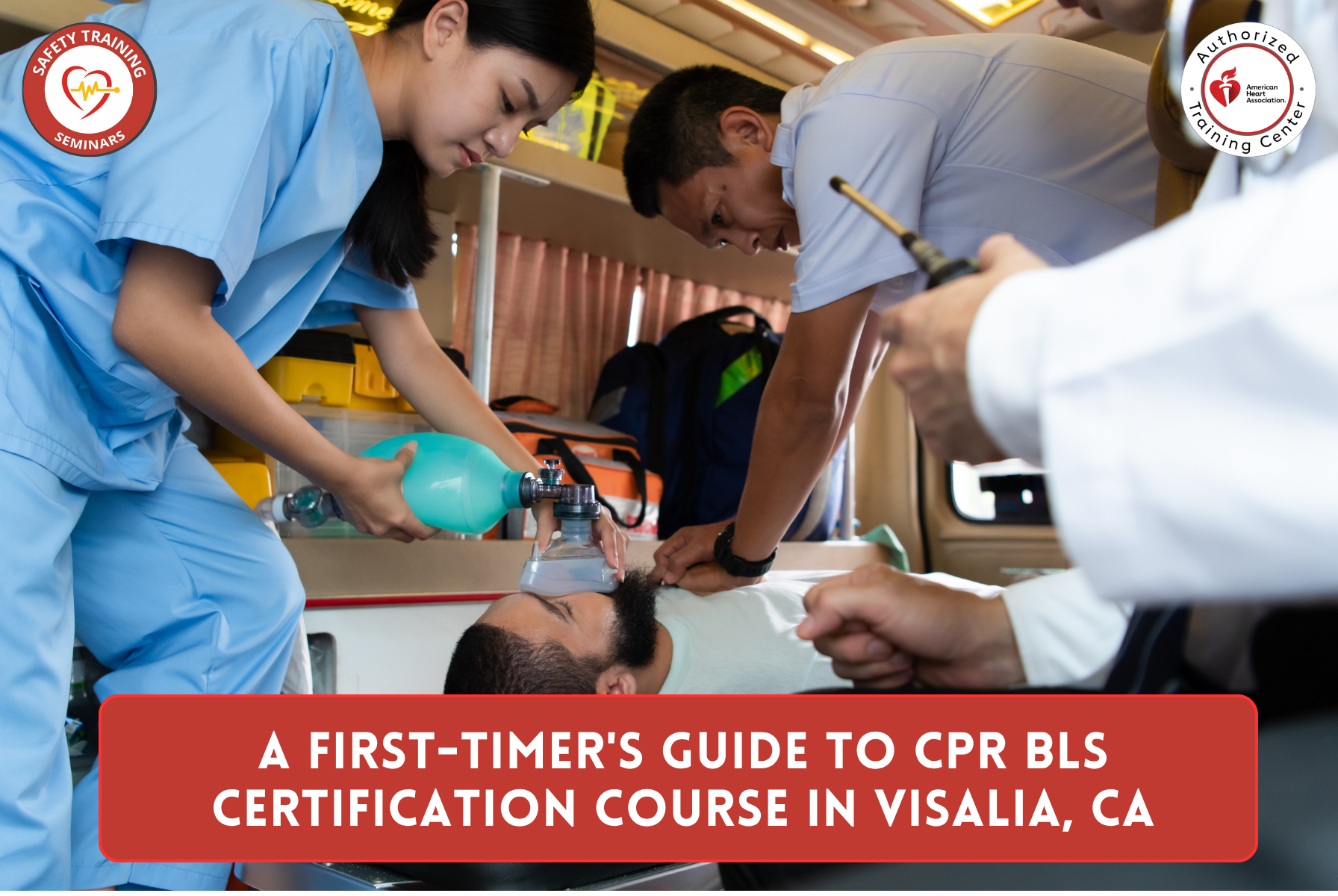
- Bag-Valve-Mask (BVM) Ventilation: Using two hands to establish an airtight mask seal over a patient’s face while delivering controlled breaths.
- Pulse Check Verification: Performing rapid simultaneous checks of breathing and carotid or brachial pulses within ten seconds.
- Infant Resuscitation Techniques: Executing two thumb-encircling hands compressions for two-rescuer infant care and specialized choking relief.
- Advanced Airway Support: Delivering asynchronous compressions and continuous ventilation when an advanced airway device is in place.
Step-by-Step: What Happens During Your First Class
Knowing the sequence of instruction helps you feel prepared before stepping into the training room. Resuscitation courses follow a standardized progression designed to build your physical confidence step by step.
1. Check-In and Equipment Assignment
When you arrive, your instructor verifies your enrollment. You are assigned a dedicated station equipped with adult and infant feedback manikins, pocket masks, and bag-valve-mask devices.
2. Practice-While-Watching Instruction
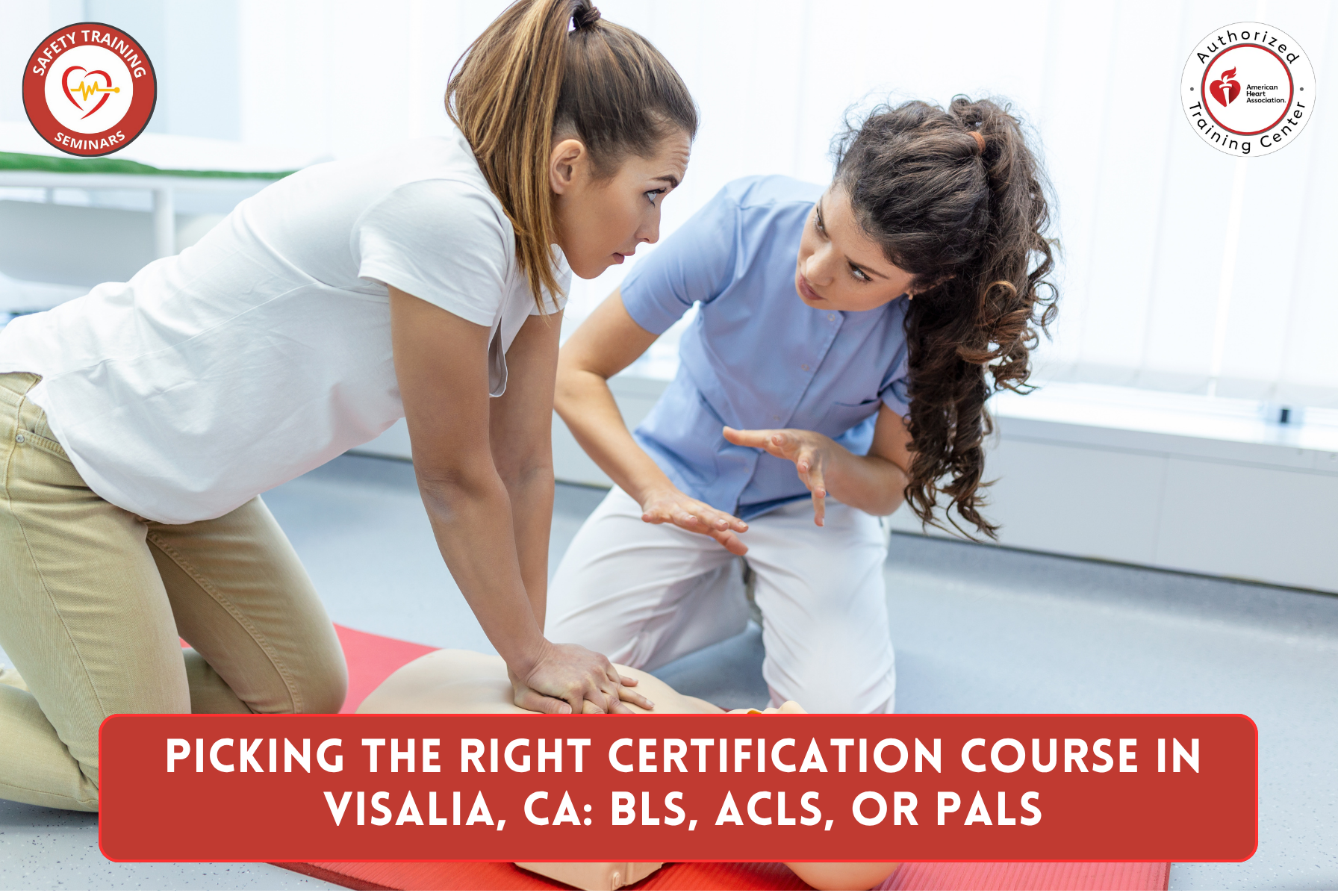
BLS courses use a guided video format where you observe clinical scenarios on screen and immediately mirror the physical actions on your manikin. The instructor circulates throughout the room to adjust your hand placement, posture, and compression depth.
3. Real-Time Feedback Drills
Modern manikins contain electronic sensors that measure your rate and depth in real time. If your compressions are too shallow or too fast, visual or audio indicators alert you immediately so you can adjust your rhythm to meet the required 100 to 120 compressions per minute.
4. Practical Testing and Written Verification
At the conclusion of practice, you demonstrate your skills in simulated solo and team rescue scenarios. Depending on your course format, you will also complete a multiple-choice cognitive exam or present proof of online exam completion.
How First-Time Students Should Prepare
You do not need prior medical background to succeed in your first BLS class, but taking a few practical steps beforehand ensures a smooth experience.
- Wear Appropriate Clothing: You will spend considerable time kneeling beside manikins on the floor. Wear comfortable trousers, scrubs, or athletic pants along with flat, closed-toe shoes.
- Review Core Ratios: Memorize basic operational numbers before class. Single-rescuer CPR for all ages uses a 30:2 compression-to-ventilation ratio, while two-rescuer child and infant CPR switches to a 15:2 ratio.
- Bring Required Documentation: If you enrolled in a blended learning option (completing online modules at home before your hands-on session), bring a printed or digital copy of your completion certificate.
Choosing Between In-Person Classroom and Blended Learning
First-time students in Visalia can choose between two main course formats to earn their certification card. Both formats cover identical learning objectives and result in the exact same provider credential.
Full In-Person Classroom Course
This traditional option takes place entirely inside the training center over approximately 3.5 to 4 hours. An instructor guides the class through lectures, instructional videos, group practice, and testing in a single sitting. This format is ideal for students who prefer hands-on guidance throughout the entire learning process.
Blended Learning (Online + In-Person Skills Session)
Blended learning allows you to complete the cognitive coursework, video lectures, and written exam online at your own pace. Afterward, you attend a quick, focused in-person session—usually 45 to 60 minutes—solely to demonstrate physical skill competency on feedback manikins. Busy nursing students and working clinicians often select this format for scheduling flexibility.
Connecting Tulare County Healthcare Workers and Students
Visalia serves as a major healthcare hub for Tulare County and the surrounding agricultural communities. Hospitals, outpatient clinics, and regional emergency services enforce strict compliance deadlines for clinical staff and incoming trainees.
Students attending local health science programs and professionals commuting across the South Valley frequently need accessible options for initial training or rapid renewal. For instance, nursing candidates reviewing Dinuba, CA BLS class availability or medical assistants checking Farmersville, CA CPR course options rely on nearby facilities that offer flexible morning, evening, and weekend slots.
Similarly, clinic staff commuting along Highway 198 or Highway 99 appreciate local training centers that streamline skills verification. Dental personnel researching Exeter, CA BLS certification schedules or home health aides exploring Lindsay, CA CPR class schedules can easily fit hands-on sign-offs into their work week.
First responders and hospital staff residing farther south who check Porterville, CA BLS training options or search for options near Tulare, CA benefit from having a dedicated training site centrally located in Visalia.
Earning Your Card at Safety Training Seminars Visalia
Safety Training Seminars provides professional resuscitation courses designed to help healthcare workers, students, and emergency personnel meet institutional compliance standards. The Visalia facility features individual equipment stations, modern feedback technology, and rapid digital card processing.
- Training Center Address: Safety Training Seminars Visalia CPR Training Center Address: 5215 W Noble Street, Suite 102, Visalia, CA 93277.
- Regional Convenience: Situated near West Noble Street, the facility offers straightforward access for residents traveling from nearby Tulare, Exeter, Dinuba, and Farmersville.
After completing your physical skills verification, your official digital provider card is issued electronically, allowing you to submit proof of certification to your employer or school program manager without delay.
Frequently Asked Questions
Do Visalia healthcare employers accept online-only CPR cards?
No. Medical centers, nursing schools, and clinical facilities throughout Visalia and Tulare County strictly reject online-only CPR certificates that lack a physical skills test. Official compliance requires hands-on demonstration of compressions and ventilations on feedback manikins in the presence of an instructor.
How long is my BLS provider certification valid?
A BLS provider card remains valid for two years through the end of the month in which it was issued. To prevent gaps in your employment or clinical eligibility, plan to take a renewal course approximately 30 days before your card expires.
What happens if I struggle with the physical compressions during class?
Instructors are present to help you succeed. If your compression depth or speed does not meet standard parameters on the feedback manikin, the instructor will offer immediate coaching on your stance, hand placement, and leverage so you can re-test the skill successfully.
Can non-healthcare professionals take a BLS course?
Yes. Anyone may enroll in a BLS course. However, non-clinical professionals such as teachers, daycare operators, and fitness trainers usually only need a general CPR and First Aid card. Always confirm with your employer or licensing board before registering.
Ready to Schedule Your Visalia BLS Class?
Completing your first BLS CPR course is a manageable and straightforward process when you know what to expect. By selecting a course format that aligns with your schedule, dressing comfortably for physical practice, and reviewing core CPR ratios beforehand, you can fulfill your professional requirements with confidence.
Verify your employer or academic program guidelines, choose your preferred session time, and visit the Safety Training Seminars Visalia location page to view class schedules and secure your seat.