Where Preventive Health Training Fits in California Childcare Licensing
California’s Child Day Care Act, enforced through the California Department of Social Services (CDSS) Community Care Licensing Division, sets health and safety training requirements in Health and Safety Code Section 1596.866. Under that law, at least one director or teacher at each Child Care Center, and each Family Child Care Home licensee who provides care, must complete health and safety training made up of two parts:
- Pediatric First Aid and CPR
- Preventive Health Practices, the subject of this course
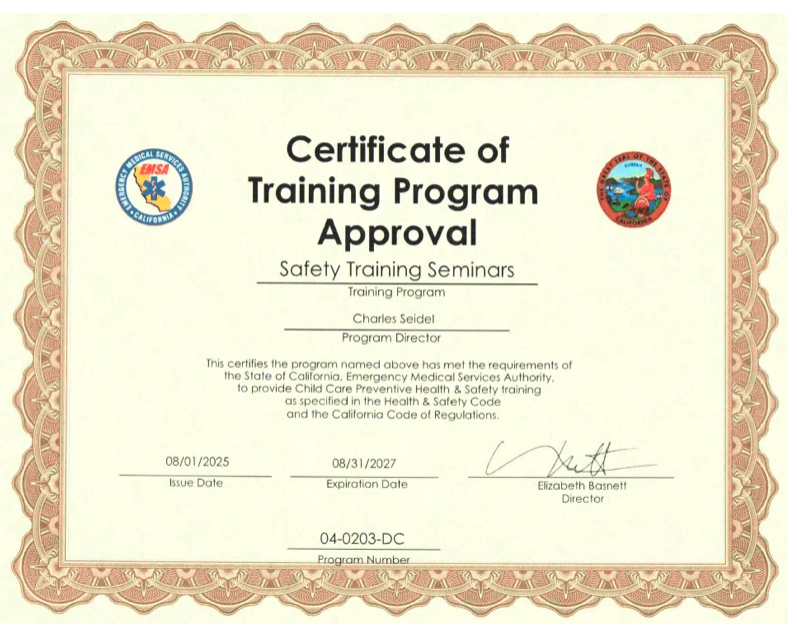
The California Emergency Medical Services Authority (EMSA) approves the training programs that teach these subjects. EMSA requires a complete Preventive Health and Safety course to include a 7-hour preventive health component and a 1-hour nutrition component. Since July 1, 2020, EMSA-approved courses have also had to include lead poisoning prevention instruction based on the California Department of Public Health (CDPH) curriculum.
Requirements are not the same for every person. Your role, the type of facility, when your license was issued, and your employer’s policies all matter. This page is general information, not regulatory advice. Before you enroll, confirm your specific requirements with Community Care Licensing or your licensing analyst.
What the EMSA Preventive Health and Safety Course Teaches
Childcare work is full of small decisions that affect children’s health. The course gives providers a working framework for those decisions. Topics include:
Infectious disease recognition and prevention. Providers learn how illness spreads in group care, what role immunizations play, and when a child may need to be excluded from care.
Childhood injury prevention. This covers safety policies, supervision, and how to manage the risky behaviors that often lead to injuries in children.
Environmental sanitation. Diapering areas, toilets, and kitchen surfaces are where germs spread most easily in a childcare setting. Training covers cleaning and sanitizing routines that reduce that risk. It also addresses indoor air quality, which matters for children with asthma or other respiratory conditions.
Mandated reporting. Childcare providers in California are mandated reporters, and the curriculum reviews what that responsibility involves.
Lead Poisoning Prevention for Tulare County Childcare Programs
Young children are more vulnerable to lead than adults. They put their hands and objects in their mouths often, and their bodies absorb lead more readily while they are still developing. Lead exposure can affect learning, behavior, and growth, and it often causes no obvious symptoms.
Common sources include deteriorating paint in older buildings, contaminated soil and dust, certain imported goods, and some traditional remedies or cookware. Many Visalia-area providers care for children in homes built across several decades, so knowing how to spot and reduce these hazards has practical value.
The lead poisoning prevention module follows the CDPH Child Care Lead Poisoning Prevention Training Curriculum. It teaches providers to identify likely exposure sources, reduce children’s contact with them, and share accurate information with families. For local public health questions, parents and providers can also contact the Tulare County Health & Human Services Agency.
Childhood Nutrition: The One-Hour Requirement
California law requires at least one hour of childhood nutrition within the Preventive Health Practices course for licenses issued on or after January 1, 2016. That instruction must include age-appropriate meal patterns based on the current Dietary Guidelines for Americans.
In everyday practice, nutrition training helps providers handle situations such as:
- Food allergies. Reading labels, preventing cross-contact, and following each child’s care plan.
- Specialized diets. Accommodating medical, cultural, or family dietary needs while still meeting children’s nutritional needs.
- Diabetes. Understanding how meals and snacks affect a child with diabetes and communicating with parents about the child’s routine.
- Feeding and growth concerns. Noticing picky eating, feeding difficulties, or growth changes that should be discussed with parents.
- Dental health. Limiting sugary drinks and snacks and supporting healthy habits early.
The training also points providers to the Child and Adult Care Food Program (CACFP), which can help eligible programs with meal costs.
Who in Visalia Typically Takes This Course
Visalia has a broad early childhood community, so the people who enroll in EMSA childcare training come from many different situations:
- Aspiring Family Child Care Home providers. The Tulare County Office of Education (TCOE) Resource & Referral program in Visalia runs the Child Care Initiative Project, which helps people interested in family child care licensing. Health and safety training is a common next step for people working toward a home-based license.
- Child Care Center directors and teachers at preschools and child development centers across the city.
- Child Development students. College of the Sequoias offers Child Development programs at its Visalia campus, and coursework there includes child health, safety, and nutrition. Students planning a career in licensed care may want to understand the separate EMSA training requirement. Whether a college course satisfies your licensing requirement is something to confirm with Community Care Licensing.
- Licensed providers renewing or reorganizing staff who need a qualified person on site.
Serving Visalia and Surrounding Tulare County Communities
Visalia is the county seat of Tulare County and sits along Highway 198 east of Highway 99 in the southern San Joaquin Valley. That central location makes the city a practical training stop for providers in nearby communities.
Childcare professionals from Visalia, Tulare, Exeter, Farmersville, Goshen, Ivanhoe, and Woodlake may consider the Visalia Training Center when looking for local Preventive Health and Safety training. Some providers from Hanford in neighboring Kings County may also find Visalia convenient. Families and providers throughout the area already rely on Visalia for regional services, including Kaweah Health Medical Center and the TCOE offices on Doe Avenue.
Safety Training Seminars in Visalia
Safety Training Seminars offers EMSA Preventive Health and Safety training at its Visalia location:
Safety Training Seminars Visalia Training Center: 5215 W Noble Street, Suite 102, Visalia, CA 93277
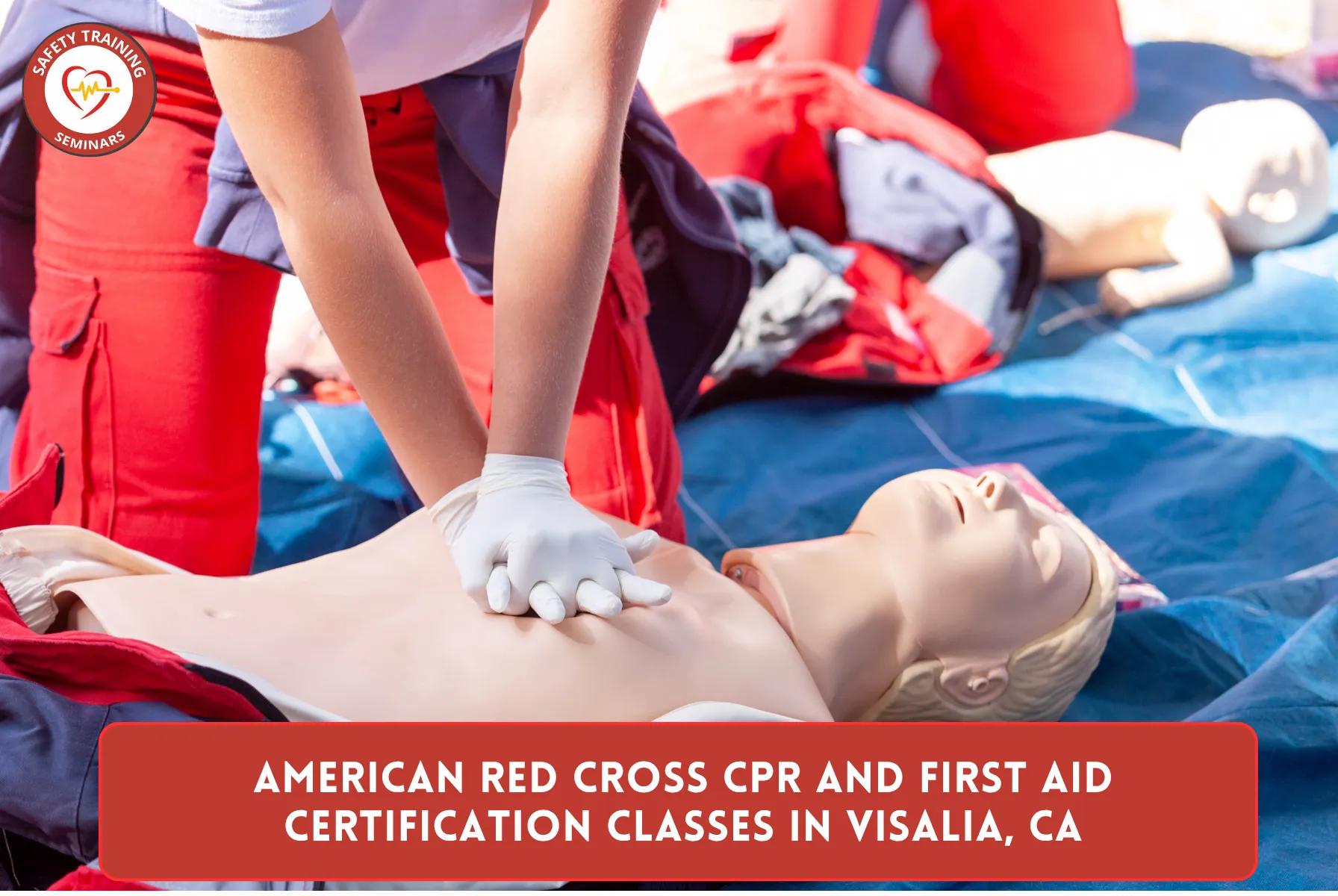
Many childcare providers need both parts of the health and safety requirement. Safety Training Seminars also offers Pediatric CPR and First Aid training, so providers can look at both courses in one place. To see current class dates, times, and enrollment details, visit the EMSA Preventive Health and Safety course registration page.
Before You Register: A Short Checklist
- Confirm what you need. Ask your licensing analyst or employer whether you need Preventive Health Practices, Pediatric CPR and First Aid, or both.
- Check the course approval. Make sure the course you choose is an EMSA-approved Preventive Health and Safety program that includes the nutrition and lead poisoning prevention components.
- Keep your documentation. Licensing may ask to see your proof of completion, so store your course completion card somewhere you can find it.
- Review the registration page. Schedules and class formats can change, so check the course page for the most current details.
Start Your Preventive Health Training in Visalia
Preventive health training gives Visalia childcare providers practical skills for keeping children healthy: cleaner routines, safer meals, fewer injuries, and less lead exposure. If you are opening a Family Child Care Home, working at a Child Care Center, or preparing for a career in early childhood education, EMSA Childcare Health & Safety Certification is a sound place to begin. Confirm your requirements, then view upcoming Visalia class dates with Safety Training Seminars.